What is a meme coin and how do top traders actually profit from it?
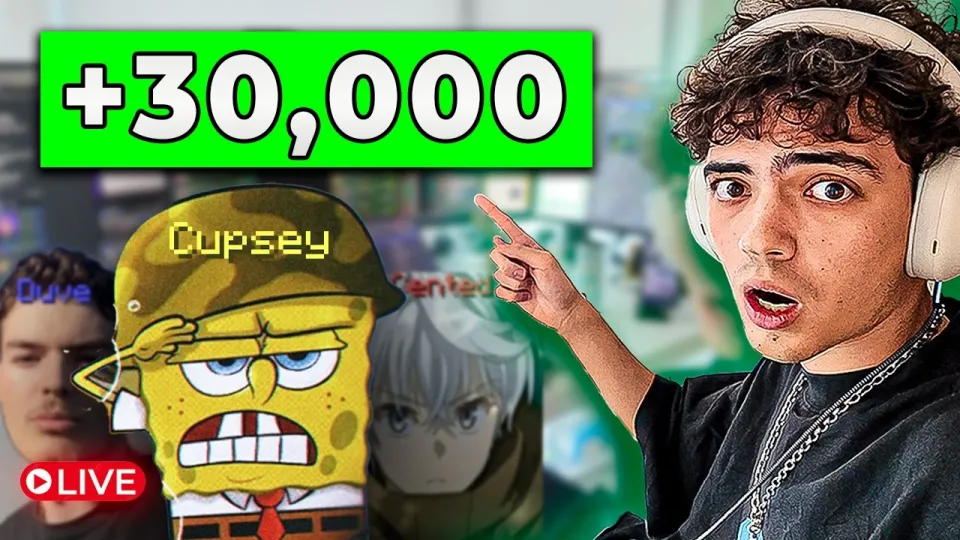
Video: I Traded With The World’s #1 Memecoin Trader
Need articles like this for your video? They help promote it on YouTube and Google — order them in the Telegram bot @sat_sit_bot. It writes articles around your video, embeds the video and publishes them on popular niche websites (no ads). Free trial — 50 articles.
· based on the channel Ethan Prosper
Key takeaways
- A meme coin is a token with no cash flow or product — price is driven purely by attention, liquidity and narrative.
- In Ethan Prosper's session with Cupsey, early trades on Lobo and a 1% token produced roughly +200 SOL.
- A single trade on a token tied to Elon Musk's Grok bot reportedly netted about +$15K.
- One AI-themed launch ('cook') added around +80 SOL to the session's P&L.
- The traders used Solana terminals such as Padre/Axiom with copy-trading and multi-wallet setups, not spot buy-and-hold.
A meme coin is a cryptocurrency with no product, cash flow or roadmap behind it — its price is set entirely by attention, liquidity and narrative, which is why it can multiply in hours and go to zero just as fast. The traders in Ethan Prosper's session with Cupsey, one of the most followed Solana meme coin traders, made their money by being early on new launches and exiting into the crowd, not by holding. If you want to follow the same route, registration on the terminal they used is available via Padre trading terminal.
What a meme coin actually is and why it has no fundamentals
A meme coin is a token whose value rests on a joke, a mascot or a moment of internet attention rather than on revenue. Dogecoin and Shiba Inu built the category, but the modern version is a launchpad token created in minutes on Solana through pump.fun-style platforms, where a bonding curve prices the coin until it graduates to a decentralized exchange. Because there is no earnings model, the only things that matter are:
- Liquidity — how much money sits in the pool and how easily you can exit without moving the price.
- Attention — social posts, influencer mentions and Telegram/Discord chatter that bring in new buyers.
- Supply control — how much of the token the deployer and early wallets hold, and whether they can dump on you.
- Narrative — a recognizable story (an AI agent, a celebrity tweet, a mascot) that makes the coin easy to talk about.
That is the whole thesis. A meme coin has no earnings multiple to argue about, so the analysis is social and on-chain, not financial.
How the top traders in the session actually made their money
The session with Cupsey shows a repeatable pattern: enter tiny new pairs within seconds of launch, size up only when the chart confirms buyers, and sell into strength rather than waiting for a target. Across the run, the pair logged roughly +200 SOL on the opening trades on Lobo and a token called 1%, about +$15K on a coin tied to Elon Musk's new Grok bot, and around +80 SOL on an AI-themed "cook" launch, with a final trade closing the session. The numbers are large because the position sizes and the speed were large — not because the coins were safe.
What separates this style from casual buying is execution:
- Speed — new pairs are scanned continuously; a delay of a minute changes the entry price completely.
- Wallets — multiple wallets and copy-trading tools let a trader follow a profitable address automatically.
- Exit discipline — profits are taken in tranches on the way up, not held for a dream multiple.
- Loss caps — a failed launch is cut fast, because most new pairs never recover.
The tools behind meme coin speed trading
The workflow in the video runs through Solana trading terminals rather than a standard exchange interface. Ethan's own entry point is the Padre terminal sign-up, and Cupsey's public wallet and social profile are shared openly so viewers can watch the addresses and the calls in real time. Typical features of these terminals include:
- instant swap routing on Solana with priority fees to beat congestion;
- a live feed of new pump.fun pairs with dev holdings and bundle checks;
- copy-trading that mirrors a chosen wallet's buys and sells;
- multi-wallet management so one trader can spread entries and exits.
None of this removes risk. A terminal only makes you faster; it does not tell you which launch will survive.
Why most retail traders lose money on meme coins
The uncomfortable truth is that speed trading is a professional grind, and the people posting four-figure SOL sessions are the survivors of a very large pool of losers. Several viewers of the video made exactly this point — that the traders on screen are running multi-wallet setups and long 10-hour trencher days, and that the same tools that let them front-run a launch can be used against smaller buyers. The practical risks are concrete:
- Rug pulls and dev dumps — the deployer or bundled wallets sell into your buy.
- Slippage and fees — thin liquidity means your exit price is far below the chart price.
- Sniping bots — automated buyers take the first block before a human can click.
- Survivorship bias — you see the +200 SOL session, not the dozens of failed attempts.
- Time cost — this style demands hours of screen time daily, not a weekly check-in.
A slower approach — trading larger, more liquid coins, or sizing meme coin exposure as a small speculative slice of a portfolio — is a legitimate way to participate without competing against bots.
Common questions from viewers of the session
Viewers repeatedly asked how to pick which coins to ape, what "faucets" means in this context, and whether they could join a private group for a day. The honest answers are less glamorous than the P&L screenshots. Coin selection in this niche is a filter problem: check dev wallet history, bundle percentage, holder distribution and whether the narrative has a real audience before you size in. "Faucets" in trader slang usually refers to small, repeatable sources of income or free tokens that keep a wallet funded — not a guaranteed edge. And access to private groups is a paid product, which is worth remembering when someone's results are being used to sell it.
Useful links
- Padre trading terminal — registration and bonus — the terminal used in the session.
- https://ethanprosper.com — Ethan Prosper's link hub.
- https://x.com/cupseyy — Cupsey's public profile on X.
- https://discord.gg/solmafia — free SOLMAFIA Discord community.
- https://www.joinpastel.com/r/ref=ETHAN — Pastel, the paid research Discord.
The bottom line on meme coin trading
A meme coin is a pure attention asset, and the traders who profit from it treat it as a speed and risk-management game rather than an investment. The session reviewed by Ethan Prosper shows what that looks like at the top level — roughly +200 SOL on opening trades, about +$15K on a single Grok-themed coin, and +80 SOL on an AI launch — but also how much infrastructure, screen time and discipline sit behind those numbers. If you want to test the workflow yourself, you can start on the Padre terminal and paper-trade the process before risking real capital. Treat any meme coin position as money you can lose entirely, and remember that the channel «Ethan Prosper» is documenting a high-risk style, not handing out a guaranteed strategy.
Source: I Traded With The World’s #1 Memecoin Trader · Markdown version
Questions & answers
Is a meme coin a real investment?
No — a meme coin has no cash flow, product or earnings, so it cannot be valued like a stock or a utility token. Price comes entirely from liquidity and attention, which means gains depend on someone paying more later. Treat it as a speculative trade with a defined amount you can afford to lose.
How much capital do you need to trade meme coins the way the video shows?
The traders in the session were moving position sizes measured in hundreds of SOL, which is far beyond typical retail capital. You can start with a fraction of a SOL on Solana, but small accounts are hit hardest by fees, slippage and priority costs. Scale comes from process and repetition, not from a big first deposit.
Why do most people lose money on new meme coin launches?
New pairs are dominated by sniping bots, bundled dev wallets and traders watching the same feed with faster tools. Retail buyers often enter after the first spike and exit after the dump. Add slippage, failed transactions and rug pulls, and the base rate for a random launch is heavily negative.
What tools do professional meme coin traders use?
They use Solana terminals with instant routing, new-pair feeds, dev and bundle checks, multi-wallet management and copy-trading, such as the Padre terminal linked in the video description. Cupsey's public wallet is also shared so others can track the address. Tools improve speed and information, but they do not remove the risk of losing the entire position.